
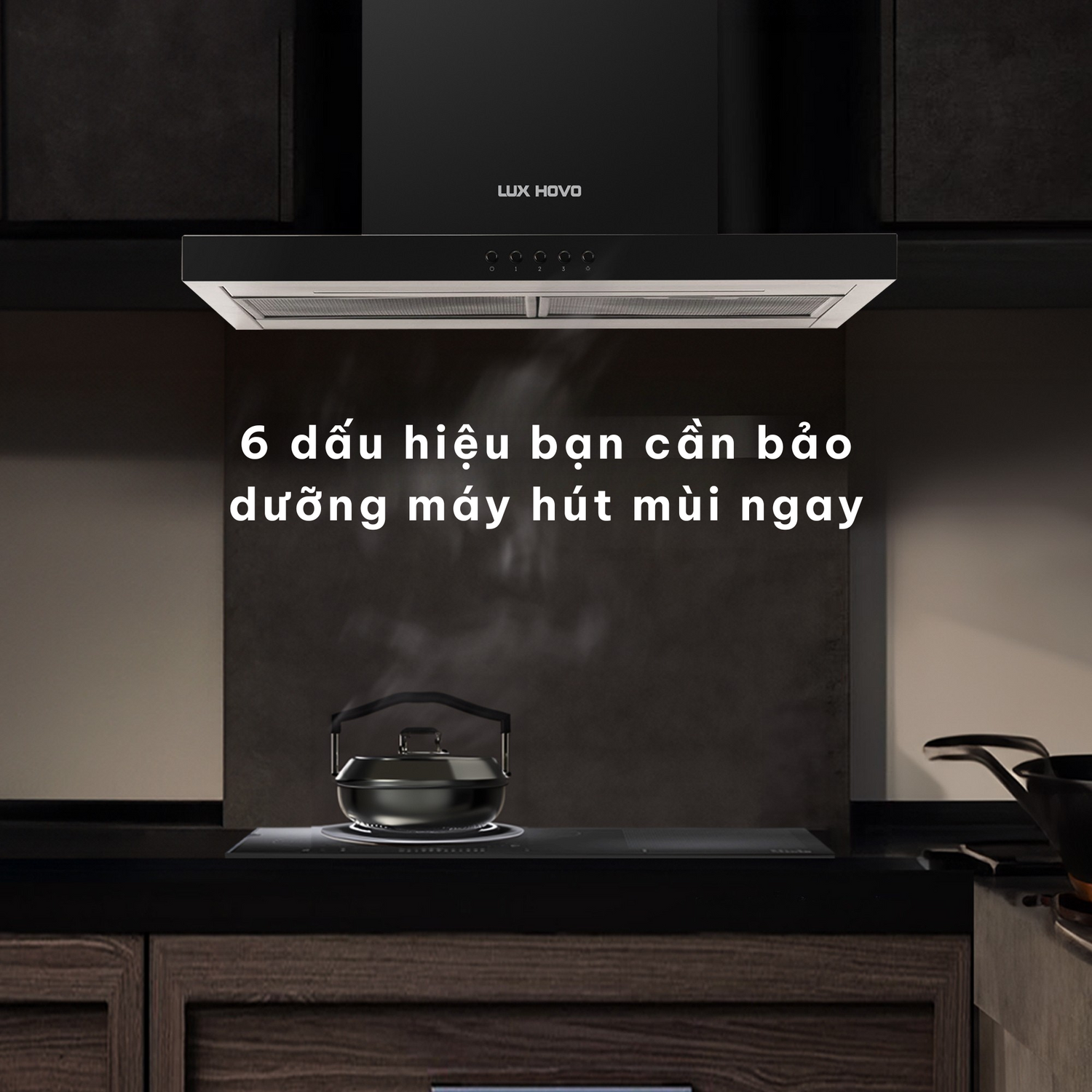
In a modern kitchen, a range hood is an almost indispensable appliance for keeping the air clean and pleasant. However, after a period of use, if the range hood is not regularly maintained, the device will quickly become less efficient, noisy, or accumulate grease, affecting your health and cooking experience.
In this article, LUX HOVO will review the 6 most common signs that indicate your range hood needs inspection and maintenance. We will also guide you on how to clean your range hood at home simply and safely, ensuring optimal performance for a long time.
1. Why should you have your range hood serviced regularly?
Proper and timely maintenance of your kitchen range hood offers many practical benefits:
- Enhanced odor removal efficiency: Helps to thoroughly eliminate grease odors, kitchen smoke, and other unpleasant fumes.
- Health protection: Limits the accumulation of bacteria and mold in the filtration system and air ducts.
- Extended lifespan: Engines and components experience less wear and tear when properly cleaned, saving on replacement costs.
- Safer to use: Avoids the risk of fire and explosion due to thick grease buildup, especially with range hoods that have been in use for a long time.
2. Symptom 1: The range hood is making unusually loud noises.
If the machine is making loud noises, vibrating strongly, or acting more strangely than usual, it's very likely that the cooling fan is malfunctioning or clogged with dust, dirt, or grease. Some common causes include:
- The fan blades are covered in too much oil and dust.
- The screws are loose, the machine frame is vibrating.
- The rotating shaft lacks lubrication.
This is when you need to service your range hood immediately, to avoid letting this situation continue and damage the motor.
3. Symptom 2: Poor odor absorption, not clean air.
Do you notice that after cooking, odors still linger in the kitchen even after the range hood has been running for a while? That's a clear sign that the suction performance has deteriorated.
The causes usually lie in:
- The filter is too dirty; the range hood hasn't been cleaned properly.
- The engine is weak, and the air intake is clogged.
- Incorrect installation, the machine's airflow is obstructed.
Please check the entire system, clean it, and fix any issues promptly to ensure effective odor removal.
4. Symptom 3: Lights flicker or malfunction
The lights in your range hood help make cooking safer and more convenient. If the lights are dim, flickering, or not working, it could be:
- The light bulb broke due to the stove heat.
- Loose wires, poor contact.
- The circuit board is damp due to moisture.
This shouldn't be ignored, as it's also a warning sign that the appliance's electrical system is experiencing problems. It should be checked as part of your next range hood maintenance service.
5. Symptom 4: There is a strange smell coming from the machine.
One of the reasons you need urgent maintenance for your kitchen range hood is when you notice a slight burning or charring smell, or the smell of old cooking oil, emanating from it during use.
The causes are usually:
- Grease accumulates over time in the filter mesh.
- Oil fumes cling to the engine, causing it to overheat.
- The activated carbon filter has expired.
The best solution is to clean the filter mesh with warm water mixed with baking soda, and replace the activated carbon every 6-12 months.
6. Symptom 5: The filter screen is heavily coated with grease even after cleaning.
Have you cleaned your range hood recently, but the filter still gets dirty quickly? Perhaps you haven't been doing it correctly, or it's time to replace the filter. Especially if you cook frequently, the filter will quickly become heavily soiled. This not only causes odors but also reduces the hood's suction efficiency. You need to learn the proper way to clean your range hood, using a specialized degreasing solution or soaking the filter in hot water mixed with lemon juice and vinegar.
7. Symptom 6: The machine operates weakly or shuts off unexpectedly.
If your range hood stops working or operates intermittently, it's a warning sign:
- The engine overheated due to continuous operation.
- Exhaust fan jammed due to foreign objects or dirt.
- The electrical system is malfunctioning.
Do not attempt to continue using the device if this occurs. Prompt inspection and maintenance will help prevent short circuits, ensure safety, and extend the device's lifespan.
8. Simple ways to maintain your range hood at home.
Here are the maintenance steps for your range hood that you can perform yourself periodically each month:
8.1 Cleaning the filter
- Remove the filter from the machine (following the manufacturer's instructions).
- Soak in hot water mixed with baking soda, vinegar, or dish soap.
- Brush off any grease and oil, and let it dry completely before reattaching.
8.2 Cleaning the machine body and fan blades
- Wipe the device body with a soft cloth and a mild cleaning solution.
- Use a cotton swab or small brush to clean the exhaust fan (if it can be removed).
8.3 Inspect the engine and air ducts.
- Check for leaks, dirt, or obstructions.
- Ensure the exhaust pipe is not kinked, twisted, or leaking.
Suggestion: LUX HOVO range hoods are easy to maintain and have a long lifespan.
If you're looking for a range hood that's both modern and easy to maintain, the HALO, PIONEER, and VIS series from LUX HOVO are worth considering.
Discover the complete range of premium range hoods from LUX HOVO here .
- HALO (under-cabinet): Concealed design, easy-to-remove filter, integrated perimeter suction technology to reduce noise.

- PIONEER (wall-mounted): Modern round design, touchless Lux Motion technology, powerful and long-lasting odor removal.

- VIS (wall-mounted): Easy to clean, operates reliably, and is very suitable for open kitchen spaces.

Conclusion: Early detection and timely maintenance help your range hood last longer.
Maintaining your range hood isn't something you should only do after a problem occurs, but rather something you should do regularly as an essential part of caring for your kitchen appliance. From cleaning the range hood and checking the motor to replacing the filter on time, all of these help maintain its effectiveness, protect your health, and save on repair costs.
Don't wait until your machine is making loud noises or emitting a burning smell before thinking about maintenance. Act early to save money in the long run!


Leave a comment
This site is protected by hCaptcha and the hCaptcha Privacy Policy and Terms of Service apply.