
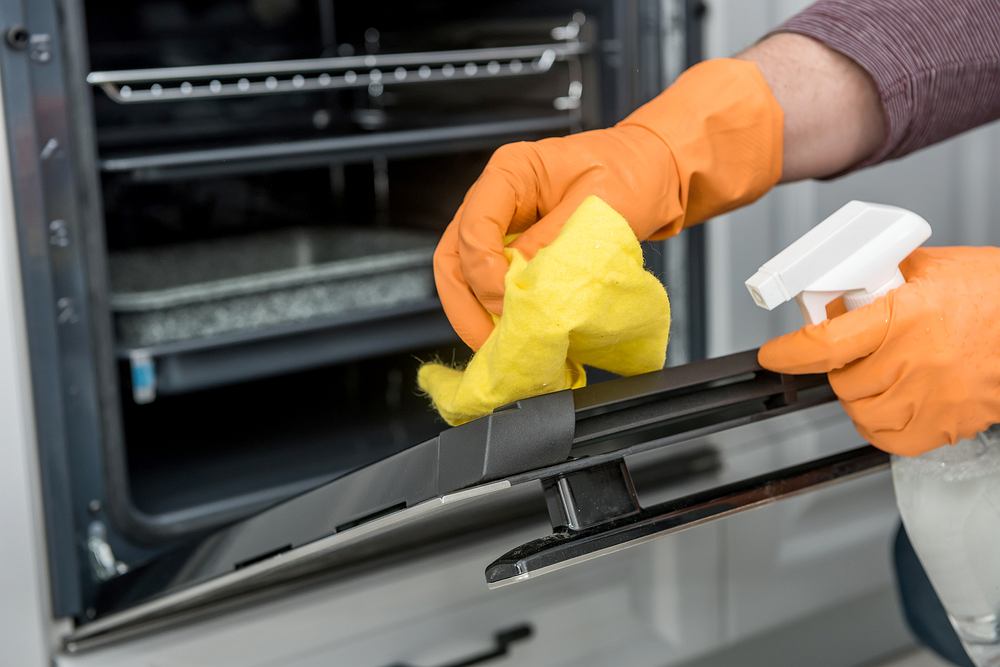
To ensure your oven remains clean, efficient, and long-lasting, proper cleaning after each use is essential. Below is a detailed guide on how to clean your oven, including both manual methods and using modern automatic settings.
1. Why is it necessary to clean the oven regularly?

Ovens are one of the most commonly used kitchen appliances, especially for families who love cooking or frequently host parties at home. However, many users still underestimate the importance of regular oven cleaning, leading to rapid deterioration of the appliance and even potential health risks for the whole family. Below are the top reasons why you should clean your oven after each use:
1.1 Minimize odor and smoke residue on food.
Grease and food scraps left over from each grilling session will be re-burned during subsequent uses, creating smoke and an unpleasant burnt smell. These odors not only affect the taste of the food but can also cling to other kitchen utensils. According to the World Health Organization (WHO), in the long term, they can also create harmful compounds such as acrylamide – a substance that can cause cancer if accumulated over time.
1.2 Ensuring food safety
Cleaning your oven after each use is the simplest way to limit the growth of bacteria and mold. Especially in a hot and humid climate like Vietnam, an oven cavity that isn't thoroughly cleaned can easily become an ideal breeding ground for microorganisms. Therefore, this can directly affect the health of all family members, especially young children and the elderly.
1.3 Helps the oven operate efficiently and last longer.
Proper oven cleaning extends the lifespan of internal components such as the convection fan, heating element, and sensors. A clean oven also ensures more even heat distribution, saving energy and resulting in faster, tastier, and more authentic cooking. In the long run, you'll save a considerable amount on unnecessary maintenance and repairs if your oven always operates efficiently and smoothly.
2. Parts of the oven that need regular cleaning
Not all parts of the oven need daily cleaning, but some parts must be inspected and cleaned regularly to maintain optimal performance:
2.1 Oven Chamber
This is the main part of the oven and also the area that comes into direct contact with food. If not cleaned thoroughly, the interior cavity will easily accumulate grease, food crumbs, and develop unpleasant odors. Therefore, the most effective way to clean an oven is to combine natural mixtures such as baking soda and vinegar, or use the automatic cleaning mode if the oven supports it.
2.2 Glass doors
Oven doors are often easily stained by smoke and grease, causing the glass to fog up, making it difficult to see the food inside while cooking. Additionally, if not cleaned regularly, the glass can become yellowed and difficult to clean, affecting both the aesthetics and the oven's heat retention.
2.3 Baking trays, grill racks
Because food is placed directly on them, baking trays and grills easily accumulate grease, sauces, and burnt crumbs. Cleaning the tray or grill after cooking helps keep food delicious and prevents it from retaining the smell of the grill or leftover food.
2.4 Convection fan (if applicable)
If you're using a convection oven, this is the part that helps circulate hot air evenly throughout the oven cavity. If the fan is covered in grease or dirt, the heat distribution efficiency will be significantly reduced, resulting in unevenly cooked food. However, it's necessary to clean it carefully according to the manufacturer's instructions to avoid damaging the motor.
3. Instructions for simple manual oven cleaning at home.

Here's a simple way to clean your oven at home using simple and safe tools, without the need for harsh, toxic chemicals.
3.1 Tools and equipment needed
- Rubber gloves: protect hands from chemicals, heat, and sharp debris.
- A soft cloth or sponge: wipe away stains without scratching the surface.
- Baking soda and white vinegar: a natural, non-toxic, and health-friendly cleaning mixture.
- Warm water: helps soften grease and burnt-on residue.
- Soft-bristle brush/small brush: for cleaning corners, door crevices, or filter screens.
3.2 Detailed cleaning steps
- Turn off the oven and unplug it completely for safety.
- Remove the baking trays, grill racks, and sliding rails from the oven.
- Soak the tray and grill rack in warm soapy water for 15-30 minutes, then scrub them clean.
- Prepare a natural cleaning solution: mix 3 tablespoons of baking soda with a little water to create a paste, then apply evenly to stains in the car's interior.
- Allow the mixture to soak in for at least 6-8 hours or overnight, then wipe it off with a damp cloth.
- Spray white vinegar onto the area to be cleaned one last time to deodorize and remove any remaining stains.
- Clean glass windows using a mixture of baking soda and water, or vinegar and a soft cloth.
- Reassemble the parts and test the oven at a low temperature for 3-5 minutes to ensure there is no moisture or chemical residue left inside.
4. Automatic oven cleaning mode - How to use it?

With the development of modern kitchen technology, many high-end ovens now incorporate automatic cleaning modes, significantly saving users time and effort in cleaning. However, not everyone fully understands each mode and how to use them effectively and safely.
4.1 Common automatic cleaning modes on the market
Here are three of the most commonly used automatic cleaning technologies in modern ovens:
- Pyrolytic Cleaning: This cleaning technology heats the oven cavity to extremely high temperatures, typically around 480-500°C, to transform all food particles and grease residue into dry ash. After the cleaning process (usually lasting 1-2 hours), users only need to wipe gently with a damp cloth to leave the oven sparkling clean. This is the most thorough and powerful cleaning technology, suitable for frequent bakers.
- Catalytic Cleaning: This type of oven has a special liner made of porous or glazed ceramic material that absorbs grease and self-decomposes dirt during the baking process. The advantage is that you don't need to activate a separate mode; however, its effectiveness decreases over time, and the liner needs replacing after a few years of use.
- Steam Cleaning (also known as Hydro Clean or PureSteam Clean): This method uses steam at approximately 100-120°C to soften grease and burnt-on residue. Users can then easily wipe down the oven cavity without scrubbing. This is an environmentally friendly, energy-efficient solution suitable for users who frequently bake light foods or pastries. This mode is also currently applied to LUX HOVO's two NOIR oven models.
4.2 Key advantages of ovens with automatic self-cleaning mode
- Save time: Instead of spending hours cleaning, you only need a few simple steps to start up and then gently wipe again after you're finished.
- Deep cleaning: Helps to clean effectively, thoroughly removing even hard-to-reach areas or thick layers of grime.
- No chemicals needed: Ensures health safety, especially for families with young children or those sensitive to cleaning odors.
- Extending appliance lifespan: A clean oven cavity protects the non-stick coating and internal heating components, ensuring the appliance remains durable and looks new for longer.
4.3 Important notes when using
- Read the manufacturer's instructions carefully to avoid using the wrong mode and causing damage.
- Do not leave items in the oven when the automatic cleaning mode is activated (especially plastic, silicone, and thin aluminum trays...).
- Remember to always allow the oven to cool completely before opening the door and to clean it after each cleaning cycle.
5. Tips for cleaning your oven without chemicals.

For those who prefer a green lifestyle or don't want to use commercial cleaning products, cleaning the oven with natural ingredients is a great option – both safe and effective. Some commonly used methods include: using a combination of baking soda and white vinegar, lemon juice, or table salt, etc.
5.1 Using baking soda and white vinegar
This is a classic duo trusted by many:
- Mix baking soda with a little water to create a paste, then apply it evenly to the inside of the oven.
- Leave this mixture overnight (about 8–12 hours).
- The next morning, spray white vinegar onto the remaining areas to create a reaction that loosens the dirt and grime.
- Wipe it clean several times with a damp cloth until it's completely clean.
5.2 Using lemon juice
- Cut 1-2 lemons, squeeze out the juice, and pour it into a heat-resistant bowl.
- Place the bowl in the oven and set it to 100-120°C for 25-30 minutes.
- The steam from the lemon will help soften grease and naturally deodorize it.
- Then simply wipe it clean with a soft cloth.
5.3 Use table salt
- Sprinkle salt directly onto fresh grease stains.
- Once the oven has cooled, gently wipe it with a soft cloth. This method is effective when the stains are fresh and haven't been there for long.
Note: Absolutely do not use lemon, vinegar, or salt on poor-quality enameled stainless steel surfaces to avoid staining and discoloration.
6. Ideal cleaning frequency based on usage habits.
Not everyone uses their oven with the same frequency. Here are some suggestions for the appropriate oven cleaning frequency to help you keep your appliance in the best condition:
| Frequency of use | Gentle cleaning | Deep cleaning |
|---|---|---|
| Every day | After each baking session | once a month |
| Several times a week | once a week | Once every 2–3 months |
| 1–2 times/month | After each baking session | once every 6 months |
Further suggestions:
- Gentle cleaning: Wipe the oven cavity, trays, and glass after baking with a damp cloth or mild detergent.
- Deep cleaning: Activate the self-cleaning mode or use baking soda and vinegar, check the door seals and the convection fan if present.
- Every 6 months: Call a professional maintenance/deep cleaning technician if you use your oven continuously for extended periods.
Conclusion: Proper oven cleaning = keeping your food delicious every day
Proper oven cleaning not only helps maintain the delicious flavor of your dishes but also ensures food safety and extends the lifespan of the appliance. By combining manual methods with modern automatic features, you can keep your oven clean and operating efficiently. If you are looking for an oven with a classic European design and many superior features, NOIR is definitely a suitable and optimal choice for your kitchen.
Learn more about NOIR ovens here.
Suggested further reading:
How to choose the right oven for a modern family - 5 criteria you need to know.
What is a built-in oven? Why should you buy a built-in oven?


Leave a comment
This site is protected by hCaptcha and the hCaptcha Privacy Policy and Terms of Service apply.